Helping Children Read with Confidence and Joy

28 Sep 2026

WCESG, WCIJ, News

Parents already know that reading matters. Our responsibility is to make learning clear for children, manageable for families and joyful enough to last.
For many parents, learning to read brings both excitement and quiet uncertainty.
“Is my child genuinely reading the words or guessing from the pictures?”
“Are they progressing at the right pace?”
“How should I help at home without turning every book into another lesson?”
Recent research suggests that parents do not need more reminders about the importance of reading. They need practical support.
BookTrust’s 2026 National Family Survey, involving 3,508 parents and carers of children aged zero to eight across England, Wales and Northern Ireland, found that 90% enjoyed reading with their children. Yet daily shared reading fell from 60% in 2021 to 49% in 2025. More than half wanted additional guidance to help their children spend more time with books.
Although these are UK findings rather than measurements of Indonesian families, the tension will feel familiar to many modern parents: reading is highly valued, but busy routines, fatigue, competing activities and uncertainty about how to help can make consistency difficult.
At Wellington College Independent School Jakarta, our response brings together clarity, consistency and enjoyment.
A clear route from sounds to stories
Read Write Inc. Phonics is a systematic synthetic phonics programme created by Dame Ruth Miskin. The terminology may sound technical, but its central idea is straightforward.
Children are explicitly taught the sounds in spoken English and the letters or groups of letters that represent them. They then learn to blend these sounds to read words and segment words into sounds for spelling.
The books children read are carefully matched to the sound patterns they have already learned. This gives them an opportunity to practise successfully and independently, rather than relying on pictures or context to guess unfamiliar words.
The programme connects phonics with reading, writing and spoken language. Children practise with partners, work in flexible progress groups and are assessed regularly so teaching can respond to what they already understand and what they need to learn next.
Read Write Inc. is included on England’s Department for Education list of validated systematic synthetic phonics programmes. Its structured sequence is supported by training, coaching and assessment resources. These are important because even the best materials depend on knowledgeable, consistent teaching.
This aligns with how we teach and assess. Assessment should support learning and identify helpful next steps, rather than simply measure or label a child.
Phonics is the foundation, not the whole house
The wider evidence for systematic phonics is strong. The Education Endowment Foundation estimates an average impact equivalent to five additional months of progress across 228 studies.
However, the same evidence contains an important qualification: phonics improves the accuracy of children’s reading, but it does not automatically create vocabulary, comprehension or a lifelong desire to read.
Children therefore need both the skill and the will to read.
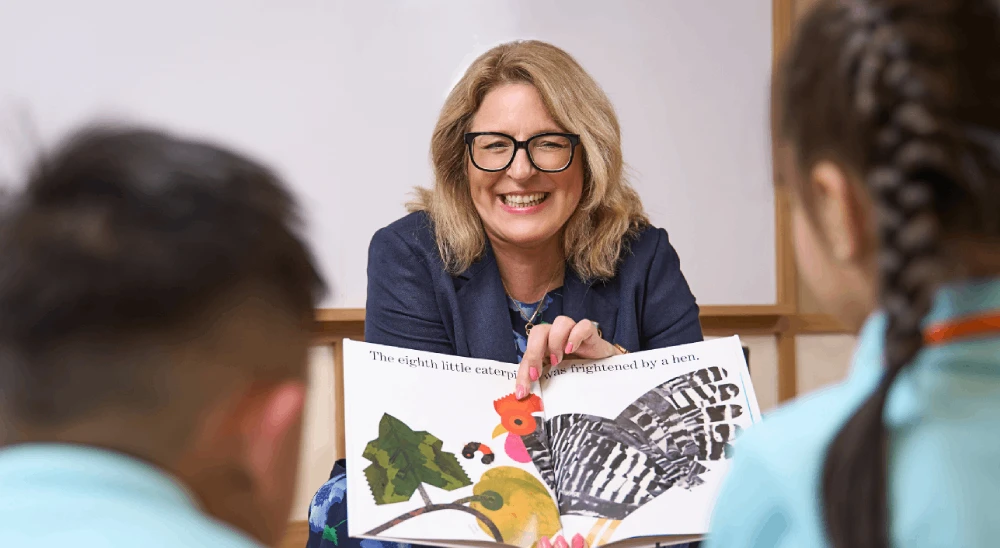
At Wellington, structured phonics sit within a broader culture of stories, purposeful conversation, vocabulary, writing and reading for pleasure. Children should encounter books they can read for themselves as well as richer stories read aloud by adults; stories that may be beyond their present decoding level but not beyond their imagination.
Supporting children in a multilingual community
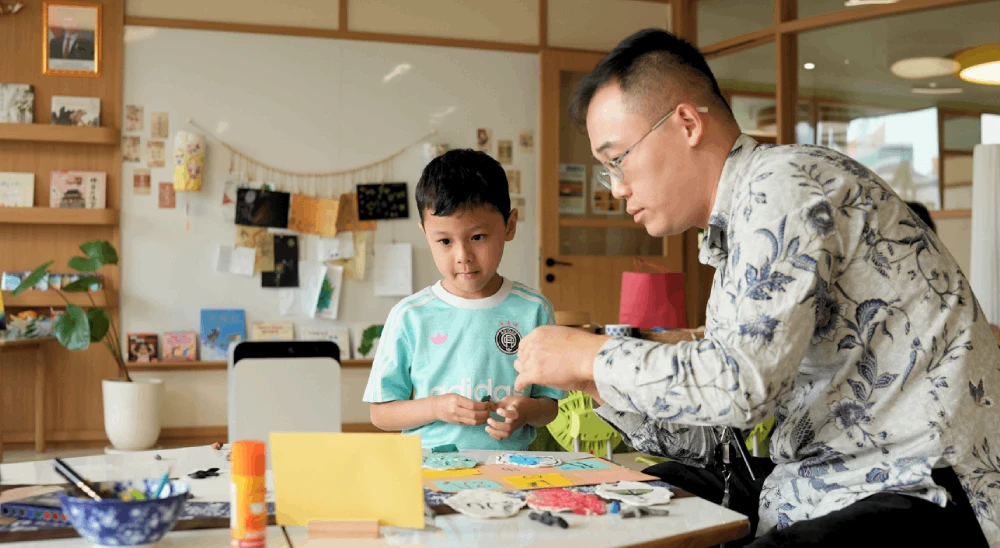
English is the main language of instruction at Wellington, while pupils also learn Bahasa Indonesia and Mandarin. Read Write Inc. provides a consistent route into the written code of English, and Ruth Miskin Training states that its international programme is designed to include children who are new to English.
This does not diminish the importance of a child’s other languages. Stories, songs and conversations in the language a family knows best continue to develop ideas, identity and connection. UNICEF’s foundational-learning guidance similarly emphasises the importance of children learning through languages they understand.

Making home reading feel manageable
Parents should not feel that they must become phonics teachers. The most helpful home support is often simple:
- Keep reading aloud, even after your child begins reading independently.
- Make short, regular practice part of an existing family routine.
- Let your child choose some of the stories and subjects you share.
- Follow the school’s pronunciation and blending guidance so that home and school feel consistent.
- Talk about characters, ideas and favourite moments, not only whether every word was correct.
- Continue sharing stories and conversation in your family’s home languages.
The Read Write Inc. family resources include short guidance films, home-reading materials and free practice e-books. Alongside Wellington’s practical parent workshops and regular communication, these resources can make supporting reading clearer and less demanding.
Learning to read should never become a choice between achievement and enjoyment. Accuracy gives children access to the page; curiosity, conversation and pleasure give them a reason to return.